

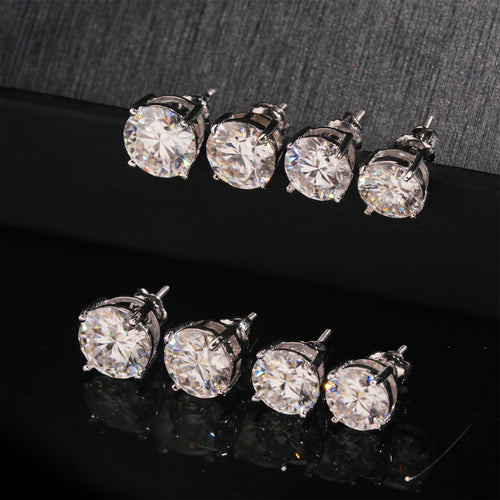



When it comes to choosing the perfect diamond, understanding the 4 C’s - Cut, Color, Clarity, and Carat - is essential. These four factors determine a diamond’s beauty, quality, and value. Whether you're shopping for an engagement ring or investing in fine jewelry, knowing how the 4 C’s work will help you make a confident and informed decision.
In this guide, we break down each of the 4 C’s in clear, simple terms and provide expert tips on how to maximize your budget without sacrificing sparkle.
1. Cut: The Most Important of the 4 C’s

The cut of a diamond has the greatest impact on its brilliance, fire, and overall sparkle. A well-cut diamond reflects light beautifully, making it appear brighter and more dazzling.
Why Cut Matters
-
Determines how much light the diamond reflects
-
Directly affects sparkle and visual beauty
-
A well-cut diamond can appear larger than its carat weight
Cut Grades
-
Excellent / Ideal: Maximum brilliance
-
Very Good: Great sparkle at a better price
-
Good: Acceptable but less lively
-
Fair / Poor: Dull appearance
Tip for Buyers: For the best value, choose Excellent or Very Good cut grades, even if you compromise slightly on color or clarity.
2. Color: How White or Yellow a Diamond Appears

Diamond color is graded on a scale from D (colorless) to Z (light yellow or brown). The less color a diamond has, the rarer and more valuable it is.
Color Grade Overview
-
D–F: Colorless - premium and highly sought-after
-
G–J: Near-colorless - excellent value with minimal visible tint
-
K–M: Faint color - more warmth, often best in vintage or yellow gold settings
What Affects Perceived Color
-
Metal choice (white gold shows color more; yellow gold hides it)
-
Size of the diamond
-
Cut quality
Budget Tip: A G–H diamond looks nearly as colorless as a D–F diamond but costs significantly less.
3. Clarity: How Free a Diamond Is From Imperfections

Clarity refers to the presence of inclusions (internal flaws) and blemishes (surface flaws). While clarity impacts rarity, most inclusions are microscopic and do not affect beauty.
Clarity Grades
-
FL / IF: Flawless or Internally Flawless
-
VVS1 / VVS2: Very, very slightly included
-
VS1 / VS2: Very slightly included (excellent value)
-
SI1 / SI2: Slightly included (can still appear clean)
-
I1 / I2 / I3: Included (visible imperfections)
Insider Advice: Many VS2 and SI1 diamonds are eye-clean, meaning imperfections are invisible without magnification.
4. Carat: The Weight of the Diamond

Carat measures a diamond's weight, not its size. While carat contributes heavily to price, two diamonds of the same carat can look very different depending on cut proportions.
Carat Buying Tips
-
Cut impacts how large a diamond appears
-
“Magic sizes” like 1.00 ct, 1.50 ct, and 2.00 ct increase prices dramatically
-
Choosing 0.90 ct or 0.95 ct can save money without noticeably decreasing size
Visual Tip: A well-cut 0.90 ct diamond can look bigger than a poorly cut 1.00 ct diamond.
How to Balance the 4 C’s for the Best Value

If you're trying to maximize your budget, here’s a proven strategy:
-
Prioritize Cut - it affects beauty the most
-
Choose G–H (near-colorless) for a bright look without the colorless price
-
Look for VS2 or SI1 eye-clean clarity
-
Select a carat weight just under “magic numbers” to save significantly
This combination gives you the most brilliance, size, and value for your money.
Types of Diamonds: Natural, Lab-Grown, and Fancy Varieties

When learning about the 4 C’s, it also helps to understand the different types of diamonds available today. Diamond type plays a major role in appearance, rarity, sustainability, and price. Here are the most common diamond categories buyers should know.
1. Natural Diamonds

Natural diamonds are formed deep within the Earth over billions of years through extreme heat and pressure. They are prized for their rarity, geological history, and long-lasting value.
Key Features
-
Formed naturally over millions to billions of years
-
Considered the traditional choice for engagement rings
-
Often hold higher long-term resale value
-
Available in all shapes, sizes, and clarity grades
2. Lab-Grown Diamonds

Lab-grown diamonds have surged in popularity thanks to their beauty and affordability. These diamonds are created in controlled laboratory environments but have the same physical, chemical, and optical properties as natural diamonds.
Key Features
-
Identical sparkle and durability to natural diamonds
-
Typically 40–70% less expensive than mined diamonds
-
Eco-friendly and sustainable options
-
Graded by the same 4 C’s (Cut, Color, Clarity, Carat)
Good to Know: Lab-grown diamonds are real diamonds - not imitations - and test the same on a diamond tester.
3. Fancy Color Diamonds

While most diamonds are white or near-colorless, fancy color diamonds come in vibrant hues such as yellow, pink, blue, green, and even red.
Key Features
-
Extremely rare, especially pink, blue, and red diamonds
-
Graded differently from white diamonds - the color intensity is the most important factor
-
Highly collectible and often investment-grade
-
Fancy yellow diamonds are the most accessible in price
SEO Angle: Customers seeking unique or luxury pieces often explore fancy color diamonds for their distinctive beauty.
4. Diamond Simulants

Diamond simulants look like diamonds but do not share the same chemical composition. Common simulants include moissanite, cubic zirconia (CZ), and white sapphire.
Key Features
-
More affordable alternatives
-
Different sparkle patterns compared to real diamonds
-
Not graded using the 4 C’s
-
Useful for fashion jewelry or budget-friendly rings
Buying Tip: Moissanite is the most popular simulant due to its exceptional brilliance and durability.
5. Diamond Shapes (Also Called Cuts or Silhouettes)

Although not a type of diamond by origin, diamond shapes are essential for buyers choosing a style that suits their taste. The most popular diamond shapes include:
-
Round Brilliant (most sparkle)
-
Oval (elongating, elegant)
-
Princess (sharp, modern)
-
Emerald (step-cut clarity)
-
Cushion (soft, romantic)
-
Pear (unique and flattering)
-
Radiant (hybrid brilliance)
-
Marquise (elongated, vintage)
Each shape reflects light differently, which can affect how the diamond expresses the 4 C’s.
FAQs About the 4 C’s of Diamonds
1. What are the 4 C’s of diamonds?
The 4 C’s of diamonds refer to Cut, Color, Clarity, and Carat, the four key factors used to determine a diamond’s quality and value. Understanding these characteristics helps buyers choose the best diamond for their budget and style.
2. Which of the 4 C’s is the most important?
Cut is generally considered the most important of the 4 C’s because it directly affects a diamond’s sparkle and brilliance. Even a diamond with excellent color and clarity will appear dull if the cut quality is poor.
3. What diamond color is best?
The best diamond color depends on personal preference and budget. D–F (colorless) diamonds are the most valuable, but G–H (near-colorless) diamonds offer excellent visual beauty at a more affordable price.
4. What clarity is best for a diamond?
The ideal clarity grade depends on size and budget. Many buyers choose VS2 or SI1 diamonds because they often look “eye-clean,” meaning inclusions are not visible without magnification, while offering better value than higher clarity grades.
5. What is the difference between carat and size?
Carat measures a diamond’s weight, while size refers to its actual dimensions and how large it appears. A well-cut diamond may look larger than a heavier diamond with a poor cut.
6. How can I get the best value when buying a diamond?
To maximize value, prioritize Cut, then choose:
-
G–H color for a bright, near-colorless appearance
-
VS2 or SI1 clarity for an eye-clean look
-
A carat weight just below major price jump points (e.g., 0.90 ct instead of 1.00 ct)
7. Do the 4 C’s apply to all diamond shapes?
Yes, the 4 C’s apply to all shapes - including round, oval, princess, and emerald cut diamonds - but each shape showcases the C’s differently. For example, emerald cuts highlight clarity, while round brilliants maximize sparkle from cut.
8. Why do diamond prices vary so much?
Diamond prices vary based on the 4 C’s, market demand, rarity, and certification. Small differences in cut, color, clarity, or carat can cause significant price changes, especially at “magic sizes” like 1.00 ct and 2.00 ct.
9. Should I buy a certified diamond?
Yes. Always choose a diamond certified by a reputable gemological laboratory such as GIA or AGS. Certification ensures you’re getting exactly what the seller claims and protects your investment.
10. Are lab-grown diamonds graded using the same 4 C’s?
Yes. Lab-grown diamonds are evaluated using the same 4 C’s - Cut, Color, Clarity, and Carat - and can offer identical visual beauty at a lower price.

Final Thoughts: Mastering the 4 C’s Leads to a Perfect Diamond
Understanding the 4 C’s of diamonds - Cut, Color, Clarity, and Carat - empowers you to choose a stone that fits your style, budget, and long-term needs. Whether you're designing an engagement ring or investing in luxury jewelry, the 4 C’s help ensure you select a diamond with exceptional beauty and enduring quality.


