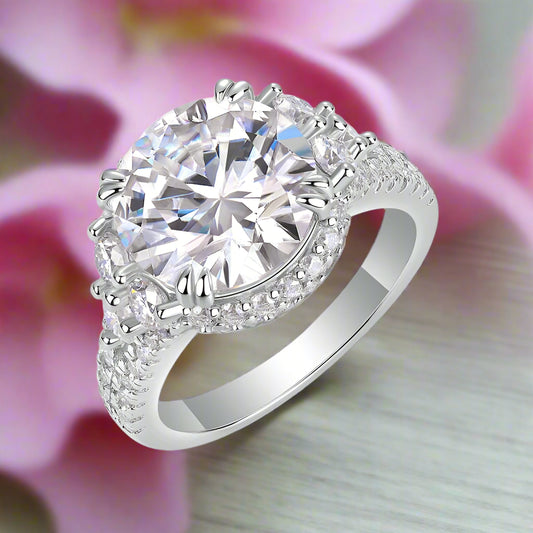

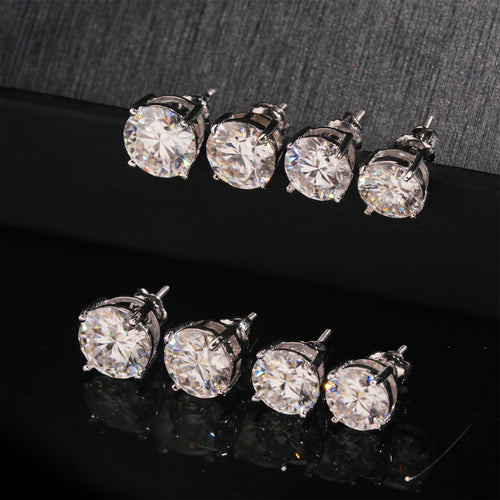
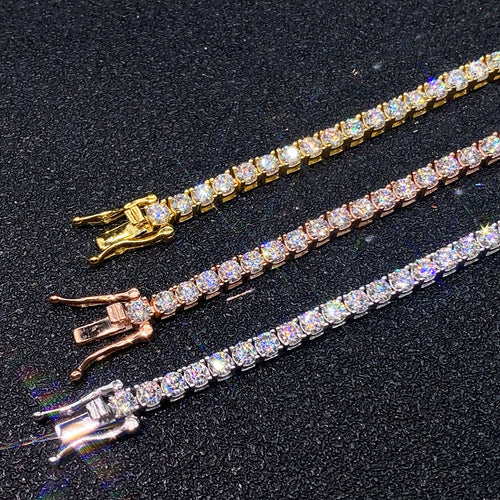
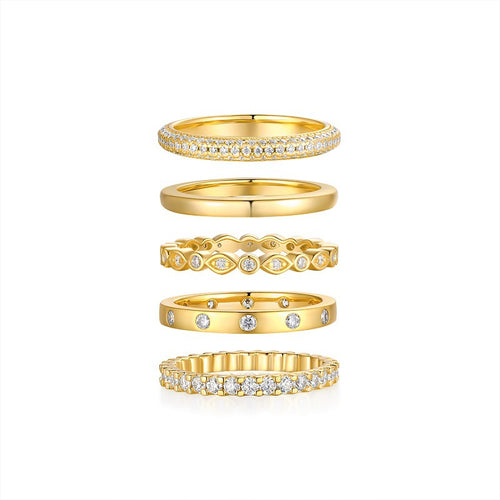


Composite diamonds have become increasingly popular among shoppers looking for maximum sparkle at a more accessible price. While they may outwardly resemble a larger single diamond, composite stones have unique characteristics that set them apart - both in appearance and value. This guide explains what composite diamonds are, how they’re made, and how they differ from traditional diamonds, helping you make an informed choice before you buy.
What Is a Composite Diamond?

A composite diamond is a cluster of multiple small diamonds that are carefully arranged and set together to create the visual effect of one larger stone. Jewelers often mount the small stones so closely that they form a seamless surface, mimicking the shape and brilliance of a single center diamond.
Key Features of Composite Diamonds
-
Made from multiple natural or lab-grown diamonds
-
Designed to appear like a larger single stone
-
Often more affordable than an equivalent-size solitaire
-
Available in a variety of shapes (round, princess, oval, cushion, and more)
How Composite Diamonds Are Made

Composite diamonds are crafted by placing several small diamonds into a custom setting. The stones are aligned using precision techniques to ensure they reflect light cohesively. Some designs use invisible settings, where metal prongs are hidden underneath the stones, enhancing the illusion of a single diamond.
Common construction methods include:
-
Cluster setting: Small diamonds arranged tightly in a circular or patterned shape
-
Invisible setting: Grooves cut into diamonds lock them together with minimal visible metal
-
Halo + cluster combination: A ring of small diamonds surrounds a cluster center for maximum sparkle
Composite Diamonds vs. Single Diamonds: Key Differences

Understanding the differences can help you decide which option suits your style, budget, and long-term goals.
✅ 1. Appearance
-
Composite diamonds create the illusion of a large stone, often at half the price.
-
Single diamonds offer uninterrupted sparkle with traditional faceting and symmetry.
✅ 2. Cost
Composite pieces are significantly more affordable because they use smaller stones. A cluster that appears to be 1 carat may cost far less than a genuine 1-carat solitaire.
✅ 3. Durability
Multiple stones mean more small prongs, which can require additional maintenance - especially if a stone loosens over time.
✅ 4. Value and Resale
-
Single diamonds typically hold higher value and have clearer grading (cut, clarity, carat, color).
-
Composite diamonds are harder to appraise and typically have lower resale value.
✅ 5. Certification
While single diamonds receive official grading reports (GIA, IGI, etc.), composite diamonds usually do not qualify for standardized certification because they contain multiple stones.

Pros and Cons of Composite Diamonds
✅ Pros
-
More sparkle for less cost
-
Great for fashion-forward designs
-
Visually striking, especially in engagement rings
-
Allows creative shapes and settings
❌ Cons
-
Lower long-term value
-
Harder to clean and maintain
-
May not look like a single diamond upon close inspection
-
Replacement can be tricky if a stone is lost
Who Should Choose a Composite Diamond?
Composite diamonds are ideal for shoppers who want:
-
A big, bold look without paying the premium for a large solitaire
-
A unique or vintage-inspired style
-
Budget-friendly engagement rings or fashion jewelry
Those who value long-term investment, simplicity, and certification may prefer a traditional single-stone diamond.
Are Composite Diamonds Right for Engagement Rings?

Yes - if you love the sparkle and savings. Composite engagement rings are beautiful and popular, but it’s important to keep expectations realistic. They offer stunning brilliance at a fraction of the cost, but they don’t carry the same prestige or resale value as a single diamond.
FAQs About Composite Diamonds
1. Are composite diamonds real diamonds?
Yes. Composite diamonds contain multiple real diamonds, either natural or lab-grown, arranged to look like one larger stone. They are not fake or simulated diamonds.
2. Do composite diamonds hold their value?
Composite diamonds typically have lower resale value than single-stone diamonds. Because they contain several small stones, they are harder to appraise and generally less valuable on the secondary market.
3. Can composite diamonds be certified?
Most composite diamonds cannot be certified by GIA or other major labs because they are made up of multiple stones. Certifications apply only to single, individual diamonds.
4. Are composite diamonds durable?
Composite diamonds are real diamonds, so the stones themselves are durable. However, because the design uses many small diamonds and prongs, the settings may require more frequent maintenance to ensure no stones loosen or fall out.

5. Do composite diamonds sparkle like real single diamonds?
They sparkle, but the look is different. Composite diamonds create a clustered brilliance rather than the unified, symmetrical sparkle of a single diamond. From a distance, the effect is very similar to a larger stone.
6. Are composite diamond engagement rings a good choice?
Yes, especially for those who want a bigger look for less money. They are stylish, modern, and budget-friendly. However, they may not be ideal if long-term value or certification is important to you.
7. Can you resize a ring with composite diamonds?
Most can be resized, but the complexity of the setting means you should always use an experienced jeweler. Some intricate invisible-set or multi-cluster styles may have limitations.
8. Are composite diamonds the same as cluster diamonds?
They are similar but not identical. Cluster diamonds are any grouping of small diamonds, while composite diamonds are specifically arranged to mimic the appearance of one larger diamond.
9. How do you clean composite diamond jewelry?
Use warm water, mild soap, and a soft brush. Because there are multiple stones and tiny gaps, regular cleaning helps maintain sparkle. Professional cleaning is recommended a few times per year.
10. Are composite diamonds cheaper?
Yes. Composite diamonds are generally far more affordable than single diamonds of comparable size. The savings come from using several small diamonds rather than one large stone.

Final Thoughts
Composite diamonds provide an eye-catching, cost-effective alternative to single diamonds, making them a smart choice for many modern jewelry buyers. Whether you're shopping for an engagement ring or a stylish piece of everyday luxury, understanding how composite diamonds differ helps you choose jewelry that matches your budget, aesthetic, and long-term expectations.